Beginner Fly Fishing for Trout in the Mid-Atlantic: a complete first-season guide
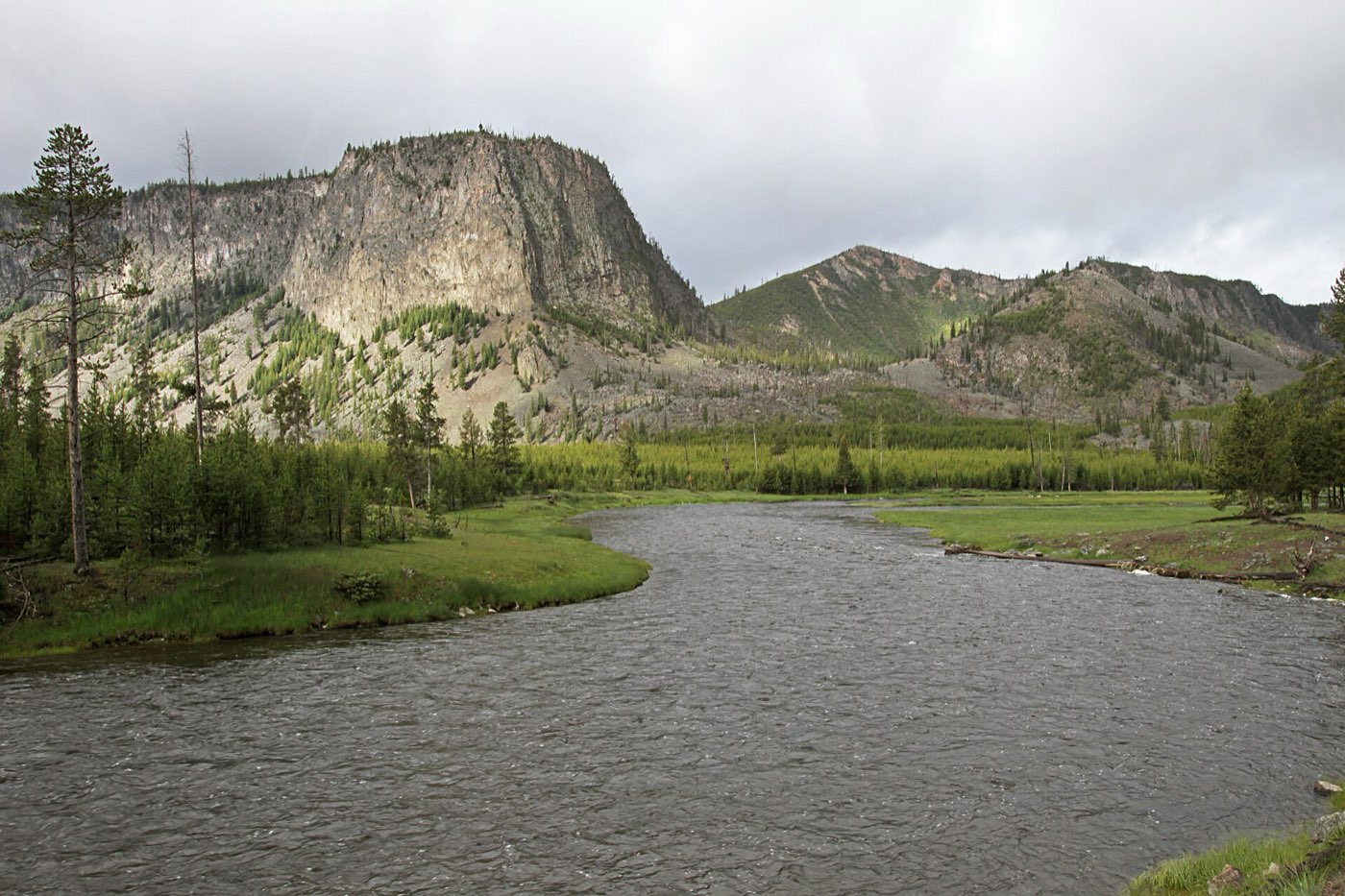
Most beginner fly fishing guides are written from a vague "Western trout stream" template — the Madison, the Yellowstone, big rivers and big skies. The Mid-Atlantic angler reads them and learns the wrong things. Limestone spring creeks, freestone tailwaters, small mountain creeks, and warm-water hybrid rivers all behave differently than a Western freestone, and the gear, flies, and tactics that work on the Letort fail on the Madison and vice versa.
This guide is the pillar for someone planning their first trout-fishing season in Maryland, Pennsylvania, Virginia, or West Virginia. It assumes no prior fly fishing experience. It covers what to buy, what to learn, where to fish, and how to get to a productive first-day on Mid-Atlantic water as efficiently as possible.
TL;DR
Buy a 9-foot 5-weight outfit. Take one casting lesson. Start on the Gunpowder Falls below Prettyboy in Maryland, or Big Hunting Creek in Frederick County, or Penn's Creek in central Pennsylvania, or Mossy Creek's public catch-and-release section in Virginia. Fish a size 14 Walt's Worm under a strike indicator until you catch your first fish, then learn dry-fly fishing during the spring sulphur or hendrickson hatch. Expect the first 10 hours on the water to feel hopeless. The next 10 will start to click. The 100th hour will be the moment you know you're a fly angler.
Why Mid-Atlantic trout water is different
Three water types dominate Mid-Atlantic trout fishing. Each demands different skills.
Limestone spring creeks flow from groundwater (springs), run cold and clear year-round, and grow educated wild trout that have seen every fly in a guide's box. The Letort, Spring Creek (PA), Big Spring Creek, Falling Spring Branch, Mossy Creek, the Smith River — these are the technical, selective trout fisheries of the East. A beginner's first outings on limestone water are humbling. The fish reject conventional presentations because they've seen them weekly for their whole life.
Tailwater freestones flow from below large dams and run cold year-round because the water comes from the cold layer of the impoundment. Gunpowder Falls below Prettyboy, the Savage River below Bloomington, the South Holston below Boone Lake, the Smith below Philpott. Tailwaters fish more like Western freestones — heavy hatches, technical but reachable fish, year-round productivity.
Mountain freestones flow from cold mountain springs and snowmelt. The North Branch Potomac, Big Hunting Creek, Bald Eagle Creek, the Cranberry River system in West Virginia. Smaller water, higher fish density, less educated fish, more forgiving for beginners.
The Mid-Atlantic also carries hybrid water — stocked spring streams (the Yellow Breeches's stocked sections), warm-cold transition water (the lower Susquehanna where smallmouth take over), and tiny mountain brookie streams (Catoctin Mountain, Shenandoah National Park headwaters). Each requires its own approach. Start with one water type, learn it, then move to the next.
What you need (the gear, in plain language)
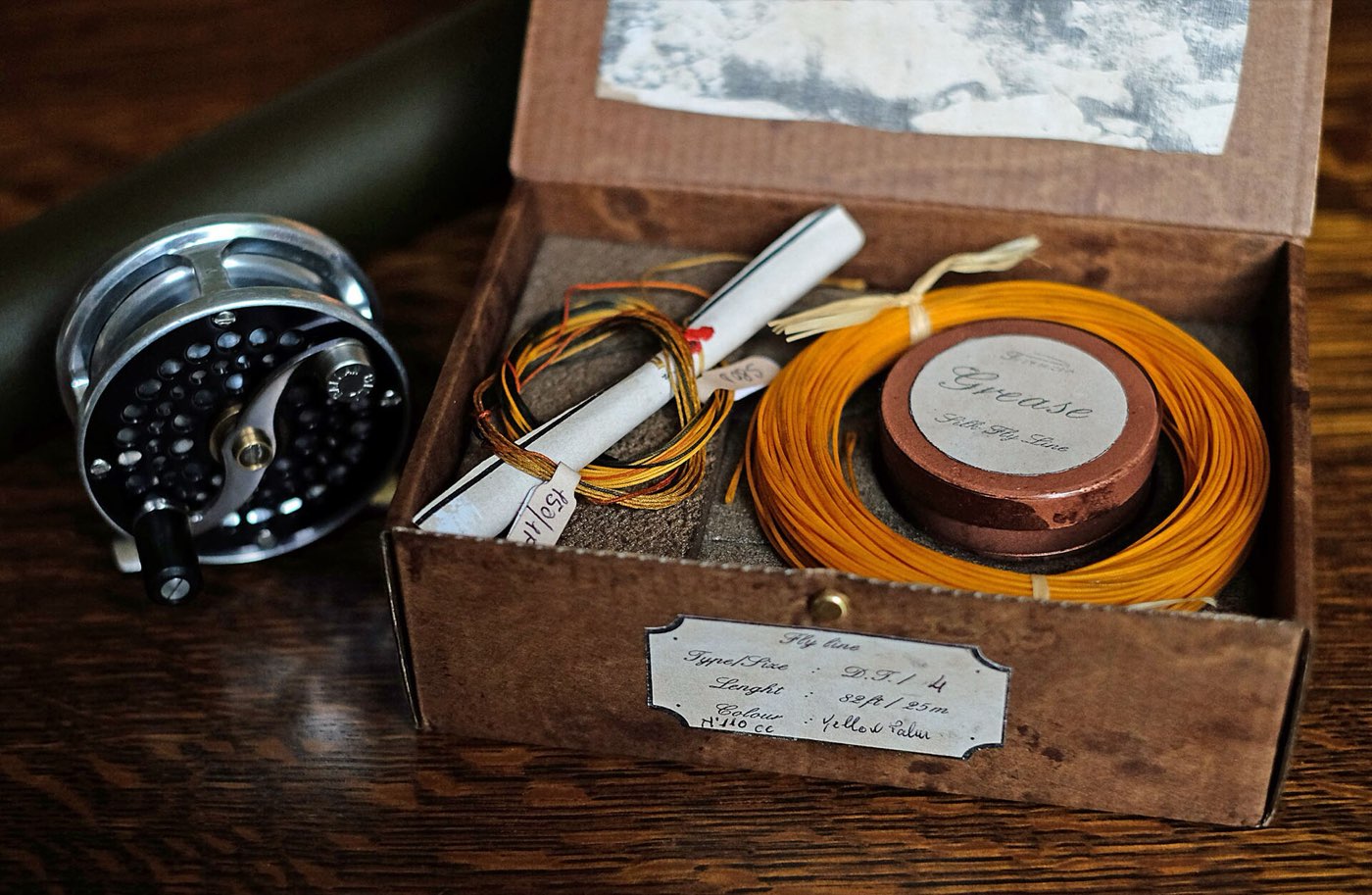
The rod. Nine-foot, 5-weight, medium-fast action. See the beginner combo gear roundup for specific recommendations at every price tier. The Orvis Encounter at $179 is the default first rod; the Orvis Recon at $498 is the rod a committed beginner buys to skip the upgrade cycle.
The reel. Whatever ships with the combo. Reel choice barely matters for trout — the fish doesn't run far enough to put real load on the drag.
The line. Weight-forward floating, 5-weight, in the standard color (yellow, light green, or peach). The line that ships with a $200 combo is functional. Replace it after two or three seasons of regular use; line wears out before rods do.
The leader. A 9-foot tapered nylon leader, 4X-5X tippet diameter at the end. Comes pre-tied with most combos. Replace when the tippet end is shorter than 18 inches.
Tippet spools. 4X and 5X fluorocarbon. Tied onto the leader to extend it. Two spools cover the first season. Brand barely matters — Trouthunter, Scientific Anglers, RIO are all fine.
Strike indicators. Foam Thingamabobbers (size: small) or yarn indicators. For nymph fishing — your default fishing technique for the first month.
Fly box. Plastic, foam-slit. Holds 100+ flies; costs $15-$25.
Nippers and hemostats. $8 each, generic. The hemostats remove hooks; the nippers cut tippet.
Net. Rubber-mesh net with C&R-friendly bag. $25-$80. Required for handling fish properly.
Wading boots. Rubber sole (Maryland banned felt; Pennsylvania and Virginia have varied policies — verify current state regulations before buying). $130-$200.
Waders. Stockingfoot chest waders. Optional in summer; required for spring and fall fishing. $130-$500.
The fly box contents. See Essential flies for Mid-Atlantic trout beginners for the full breakdown. The short answer: a dozen Walt's Worms, a dozen Pheasant Tails, a half-dozen Parachute Adams, a half-dozen Elk Hair Caddis, a few streamers (Woolly Buggers).
Total entry-tier cost: $400-$500 for everything above. The combo is the largest expense; everything else is $10-$30 line items.
Casting: the only skill that doesn't transfer from spin fishing
Spin fishing teaches you to wind a reel. Fly fishing requires casting a weighted line. The two skills are unrelated.
The fly cast works because the fly line itself has weight; the cast loads the rod with the line, then unloads forward to deliver the fly. Spin casting works because the lure has weight; the rod whips the lure forward. The mechanics are different.
Three principles for the first casting session:
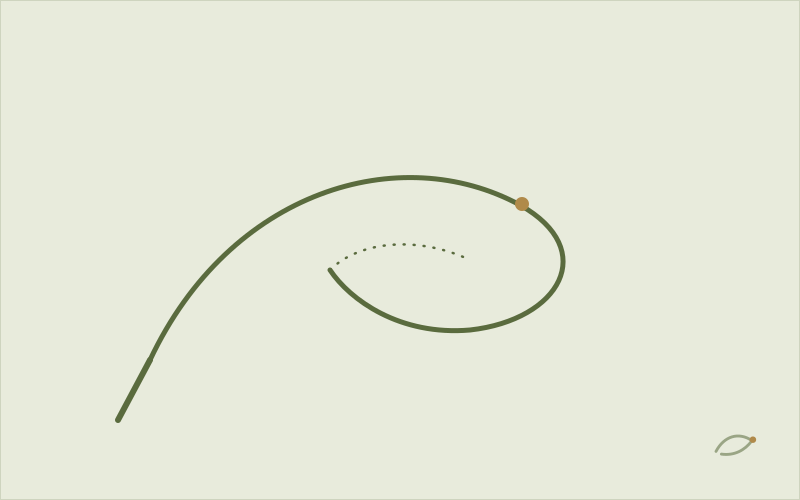
Stop on top. The rod tip must stop hard at the 10 o'clock and 2 o'clock positions. Most beginners drop the tip below 9 o'clock or sweep past 3 o'clock; both kill the cast. The stop is what loads and unloads the rod.
Pause for the line. Between the back cast and forward cast, pause long enough for the line to fully extend behind you. Watch the line over your shoulder until the loop straightens, then start the forward cast. Most beginners rush this and tangle the line.
The wrist locks. The cast is an arm motion, not a wrist motion. A locked wrist with the rod traveling on a clean arc casts further and more accurately than a flick. The instinct from baseball or golf is wrong here; suppress it.
A two-hour intro casting lesson at a local fly shop costs $50-$100 and saves 20 hours of self-teaching. Worth it for any beginner who can swing the cost.
Knots that matter (just three for the first season)
Improved clinch knot. Ties the fly to the tippet. Five wraps, pass through the loop and the formed loop, lubricate with saliva, pull tight. Failure mode: too few wraps or skipping the second pass.
Surgeon's knot. Joins two pieces of tippet. Take both ends together, form a loop, pass both ends through the loop twice, lubricate, pull. The knot for adding new tippet to a worn leader.
Triple surgeon's loop or perfection loop. Builds the loop end of a leader. Less critical for a beginner — most leaders ship with the loop pre-tied.
That's it. Skip the blood knot, the nail knot, and the figure-eight. Add them in year two if needed.
Reading water (the underrated skill)
Casting puts the fly in the water; reading water puts it where the fish are. The two skills together are 80% of fly fishing competence.
A trout chooses its lie by trading two demands: minimum effort against current, and maximum food delivery. The fish lives where these two are best balanced. Lies appear at:
- Seams — the boundary between fast water and slow water. Foam lines on the surface mark seams. Trout sit in slow water and feed from fast water.
- Pockets — slack water behind boulders or ledges in fast current. Each rock-sized pocket can hold a fish.
- Riffle heads and tails — where flow speeds up entering a riffle, or slows down leaving one.
- Inside bends of pools — the slower side of a meander.
- Undercut banks — covered shelter from above; dense fish habitat.
The full breakdown is in Reading Water on Trout Streams. A beginner doesn't need the full taxonomy; just learning to find seams (foam lines) and casting flies through them produces fish.
The first-trip plan
A concrete first day on Mid-Atlantic water:
Pick a forgiving water. The Gunpowder Falls below Prettyboy is the canonical Mid-Atlantic beginner water — high fish density, accessible parking, year-round flow. Big Hunting Creek (Catoctin Mountain) is smaller and more forgiving for casting practice. The Yellow Breeches Creek (PA) below the Allenberry section is heavily stocked.
Time it right. Late morning to early afternoon, mid-spring (April-May) or early fall (September-October). Avoid early morning summer (water too warm), winter (cold and slow), and high-water spring runoff (impossible to wade). Saturdays are crowded; weekday afternoons are better.
Rig before you wade. Tie on a size 14 Walt's Worm or Pheasant Tail. Add a strike indicator 4-5 feet up from the fly. Add 2-3 split shot 18 inches above the fly to sink it. Total leader+tippet: about 9-10 feet from fly line to fly.
Find a seam. Walk upstream from the parking access. Look for a foam line on the surface — that's a seam. Cast across and slightly upstream of the seam. Mend the line upstream so the fly sinks naturally.
Watch the indicator. Any pause, dip, or unnatural movement of the indicator is a strike. Set the hook by lifting the rod sharply but not violently. Most missed strikes are from waiting for confirmation that never comes.
Move every 10 minutes. Don't grind one piece of water. Fish each seam for 5-15 drifts, then move 50 feet upstream and find the next seam. Cover ground.
Land the fish properly. Net it head-first. Keep it in the water. Wet your hands before touching it. Remove the hook with hemostats. Hold it facing upstream until it swims away on its own.
End on a high note. Get out before frustration sets in. Three hours is plenty for a first day.
Expect to lose 5-10 flies. Expect to tangle. Expect not to catch a fish on the first or second outing. The angler who quits at outing three never catches one; the angler who keeps going until outing eight catches one and is suddenly an angler.
Common first-season mistakes
Mistake 1: rushing the cast. The rod has to load fully before unloading. Beginners speed up the stroke; the line collapses on itself. The fix: pause longer than feels right.
Mistake 2: ignoring the indicator. New anglers stare at the fly, watch the line, watch the water — and miss the indicator's small dips that signal strikes. The fix: lock attention on the indicator and let nothing else distract.
Mistake 3: fishing one fly all day. Beginners commit to a fly because they don't know what else to try. The fix: change flies every 30 minutes of no action. Switch from Walt's Worm to Pheasant Tail to Mop Fly. The data is informative even when it's "no fish."
Mistake 4: standing in the spot you should fish. Beginners wade to the obvious cast position, which is often standing on top of fish. The fix: stay on the bank or in shallow water; cast across to the seam from the side, not into the seam from the head.
Mistake 5: holding the fish. A trout out of water for 60+ seconds has high mortality even after release. The fix: minimize air exposure. Land, photograph (if at all), release within 20 seconds of removing the hook.
When to upgrade what
Upgrade order for a committed beginner:
- Casting lesson ($50-$100). Single highest-leverage upgrade. Skip everything else if budget is tight; take a lesson.
- Better tippet spools ($15 each). Generic tippet at $5 spools breaks; quality fluoro doesn't.
- Better wading boots ($150). Cheap boots leak and slip. Solid boots last five years.
- Better fly line ($80). After 2-3 seasons of cracked ends, replace.
- Better rod ($300+). After three seasons of practice, the entry-tier rod will start to feel slow. Upgrade then, not before.
Spend the early money on lessons and boots, not on rod-tier upgrades. Casting skill compounds; rod cost doesn't.
The first-season rivers (in order)
A suggested progression for a first-season Mid-Atlantic beginner:
April-May: Gunpowder Falls below Prettyboy (MD). High density of stocked and wild fish, easy access, year-round cold flow. The default beginner water. Use a Walt's Worm or Pheasant Tail under an indicator.
May-June: Big Hunting Creek (MD) or Penn's Creek (PA). Hatch fishing during sulphurs (May-June) on Penn's Creek; small-stream practice on Big Hunting. First dry fly experience.
July-August: switch to smallmouth. Trout water gets too warm. Learn warmwater fishing on the Susquehanna or Shenandoah. See Smallmouth Bass on the Fly for the contrast skills.
September-October: Mossy Creek (VA) catch-and-release section. The fall fishing on limestone water with educated browns is the next step in skill — selective fish that test what you've learned over the summer.
November-March: continue trout, focus on tailwaters. Gunpowder, Savage, South Holston run cold and fishable through winter. Slow days, fewer fish, but the angler who fishes through winter compounds skill faster than the angler who stops in October.
When you need help
Mid-Atlantic shops that train beginners:
- Backwater Angler (Hereford, MD). Casting clinics, guided trips on the Gunpowder. Theaux Le Gardeur runs the operation; the staff knows the river.
- Murray's Fly Shop (Edinburg, VA). Harry Murray's school of fly fishing has been operating since the 1970s.
- TCO (Boiling Springs, PA). Letort and Yellow Breeches specialists; offers guided trips and casting instruction.
- Spring Creek Outfitters (State College, PA). Penn's Creek and Spring Creek; deep tying classes.
Worth the cost of a guided trip in the first season — three hours with a local guide compresses several months of self-teaching.
Further reading
- The Orvis Guide to Beginning Fly Fishing by Tom Rosenbauer — the standard introductory text
- Fly Fishing for Trout by Dave Hughes — the standard intermediate text
- Reading Water on Trout Streams — the next skill to study after casting
- Maryland hatch chart, Pennsylvania hatch chart, Virginia hatch chart, West Virginia hatch chart — what's hatching when, by state
- Beginner combo gear roundup — the gear companion to this technique guide
*Last updated: 2026-04-28. *
Sources cited: Wired2Fish — Best Beginner Fly Fishing Combos, Treeline Review — 4 Best Beginner Fly Fishing Combos, Wild Water — Rod and Reel Combos 2026, Pescador on the Fly — Econ 101 Series, Thibodeau Outdoor — Beginner Fly Fishing Setup for Trout.