Smallmouth Bass on the Fly: a complete guide for the angler who knows trout
Trout anglers carry the wrong instincts to a smallmouth river. The Mid-Atlantic angler who learned on the Gunpowder or Mossy Creek arrives at the Susquehanna or Shenandoah with a 5-weight, a box of size 16 nymphs, and a habit of dead-drifting through seams — and catches one or two smallmouth, blames the river, and goes back to trout.
Smallmouth aren't trout. They're not calorie-conservative drift feeders sipping insects from a current lane. They're ambush predators that move aggressively on baitfish and crayfish, and the rules that work for selective wild browns work poorly on a smallmouth that just chased a sculpin into a rock seam.
This pillar covers what changes when the target species changes: the fish's behavior, the gear, the flies, the seasonal calendar, the rivers that produce in the Mid-Atlantic, and the specific tactical adjustments a trout angler has to make. It's the hub article for the smallmouth cluster — the spokes (specific patterns, river guides, gear roundups) link back to it.
TL;DR
Use a 6 to 8-weight rod, an aggressive line, and 0X to 2X tippet. Throw streamers (Clouser variants, Murdich Minnows, sculpin patterns), topwater (poppers and gurglers), and crayfish patterns — flies in the 2.5–4 inch range. Fish ambush points: rock seams, shoreline structure, eddy lines below current breaks, deep pools at the back of riffles. Strip aggressively; smallmouth respond to motion and commit on the chase. Best season runs late May through October on Mid-Atlantic rivers, with the topwater bite peaking July through early September. The Susquehanna, Shenandoah, Potomac, and James are the four marquee Mid-Atlantic smallmouth rivers; the New River system (VA/WV/NC) carries trophy fish.
The behavioral difference (and why it changes everything)
A trout reads each lie as a calorie equation: how much energy does it cost to hold here, and how much food does this position deliver per hour? The fish that solves that equation accurately survives. Trout strategy is conservative — minimize movement, accept what drifts past, refuse anything that costs more energy than it returns.
A smallmouth's calculation is different. Smallmouth are predators that hunt by interception. The lie is a launch point, not a feeding station. From a rock seam in the back of a riffle, a smallmouth can ambush a crayfish that swims wrong, intercept a sculpin holding above the bed, or chase a fleeing chub into shallow water. The fish doesn't wait for food to arrive at maximum efficiency — it commits to attacks that yield 40+ kcal of crayfish in a 4-second sprint.
Three implications:
Movement triggers smallmouth, drift triggers trout. A dead-drifted streamer might catch the occasional opportunistic smallmouth, but stripped streamers catch ten times as many. The opposite is true on selective wild trout water; movement spooks fish that drift-feed. Trout anglers reflexively dead-drift; the first habit to break on smallmouth water is to strip.
Smallmouth commit on the chase. A fish that follows a fly and turns away is interested. The angler who keeps stripping, accelerates, or drops the fly into a fault triggers commitment. A fish that follows a trout fly and turns away has rejected it; further casts to that fish are wasted. Different species, different gameplay.
Smallmouth eat chunks, not specks. Crayfish, sculpins, dace, baby bass — all in the 1.5 to 4-inch range. Smallmouth take size 16 mayfly imitations occasionally during heavy hatches but never as a primary food source. The fly box is built around larger profiles; size 4 to size 8 is standard, not size 14 to 18.
Gear: what changes from a trout setup
| Component | Trout setup | Smallmouth setup | Why |
|---|---|---|---|
| Rod | 9 ft 5wt | 9 ft 6-8wt | Larger flies need stiffer rod to throw; bigger fish needs more lifting power |
| Line | WF5F floating | WF7F or WF8F floating, sometimes intermediate or sink-tip | Bigger flies, longer casts, sub-surface coverage in deeper rivers |
| Leader | 9 ft tapered to 4X-6X | 7.5 ft tapered to 0X-2X | Stronger tippet for fish that hit hard and run into structure |
| Tippet | 4X-6X fluorocarbon | 0X-2X fluorocarbon or mono | Smallmouth aren't tippet-shy in the way selective trout are |
| Flies | Size 14-22 nymphs and dries | Size 2-8 streamers, poppers, crayfish | Smallmouth eat chunks |
The 6 vs 7 vs 8-weight choice is driven by water size and fly size. A 6-weight handles smallmouth on smaller rivers (Yellow Breeches at peak smallmouth season, the upper Shenandoah forks, James headwaters). A 7-weight is the all-purpose standard. An 8-weight is necessary for big rivers (Susquehanna's lower river below Conowingo, the Potomac at Harper's Ferry, the lower James) where 50+ ft casts with a deer-hair popper are routine.
The reel and drag matter more on smallmouth than on most trout. A 4-pound smallmouth in current can run 30–50 feet of backing on the first jump-and-bolt. The clicker reel that handles 14-inch trout fine doesn't have the drag to slow a fish committed to running into a logjam.
The fly box: four categories
Smallmouth eat four things, and the box reflects four categories.
1. Crayfish (the workhorse)
Roughly 70% of a smallmouth's diet by volume is crayfish, and the percentage is higher on Mid-Atlantic limestone-and-bedrock rivers where crayfish populations are dense. Any smallmouth box without three or four crayfish patterns is incomplete.
Effective patterns:
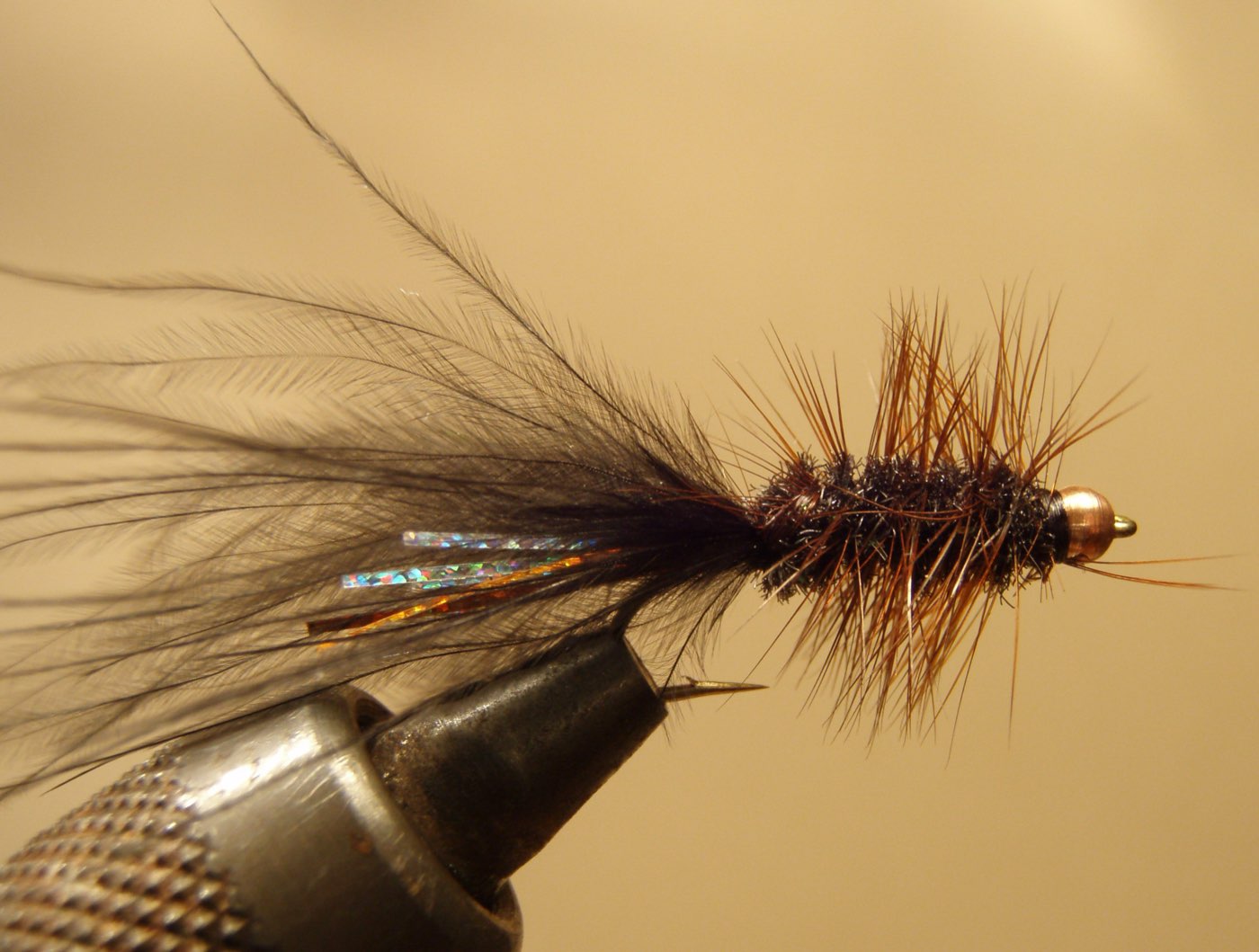
- Clouser Crayfish. The Bob Clouser pattern that started the Mid-Atlantic crayfish movement. Tan and orange, dumbell eyes, rabbit fur claws.
- Whitlock NearNuff Crayfish. Dave Whitlock's pattern; arguably the most realistic crayfish in production.
- Murray's Hellgrammite. Hellgrammites and crayfish overlap in profile. Murray's pattern, originated in the Shenandoah Valley, fishes both roles.
- Galloup's Dungeon (small). A smaller version of the streamer pattern fishes as a generic crayfish profile.
Cast across or upstream into the head of a riffle or a rock seam. Strip in 6-12 inch increments with pauses. The take comes during the pause more often than during the strip — smallmouth commit when the fly drops as if a stunned crayfish.
2. Baitfish / streamers (the search tool)
Sculpins, dace, chubs, baby smallmouth, fallfish — the second-largest food category by volume. Streamer patterns cover this category and also serve as the search tool when working unfamiliar water.
Effective patterns:
- Clouser Minnow. The Bob Clouser pattern. Possibly the most-fished smallmouth fly in North America. Standard color: chartreuse over white. Variations: gray over white (emerald shiner imitator), olive over white (sculpin), tan over orange (Susquehanna juvenile bass imitator).
- Murdich Minnow. Bill Murdich's pattern; a slimmer, more agile streamer that swims with attitude.
- Sculpzilla. A heavy sculpin pattern that fishes the bottom; the smallmouth analog to a perdigon's depth role.
- Galloup's Sex Dungeon. Articulated streamer that triggers commit-strikes on hot fish.
The Clouser is the default search fly. Cast across or downstream and across, strip with 6-12 inch pulls and 1-2 second pauses. Cover water — every cast lands in a new pocket.
3. Topwater (the highlight reel)
The topwater bite is what makes smallmouth famous. From early July through early September on most Mid-Atlantic rivers, smallmouth chase poppers and surface bugs aggressively in the morning and evening. The bite is the most spectacular fishing in the Mid-Atlantic — explosive surface takes from 14 to 18-inch fish in shallow water.
Effective patterns:
- Boogle Bug. The standard hard popper. Pop, pause, pop again.
- Stealth Bomber. Foam-bodied; subtler surface presence than a hard popper.
- Gurgler. A surface-skating fly with a foam lip; works between popper and slider.
- Sneaky Pete. Slider-style; less commotion than a popper, more than a fly.
- Deer-hair bass bug. Traditional Lefty Kreh or Dave Whitlock spun-deer-hair bug.
Cast tight to structure — overhanging banks, log jams, current breaks. Strip the fly to make commotion, pause, strip again. Smallmouth often commit during the pause. The take is the most violent in fly fishing; expect the rod to be ripped sideways.
4. Nymphs and small flies (the cold-water option)
Cold-water smallmouth (water temps under 60°F) fish slow and feed less aggressively. In April and May before the river warms, and again in October as it cools, smallmouth take smaller, slower presentations.
Some trout patterns cross over here:
- Mop Fly — works on smallmouth in stained spring water; high-attractor profile triggers cold fish
- Squirmy Wormy — same role; post-runoff smallmouth pre-spawn
- Hellgrammite imitations on size 6-8
- Heavy stonefly nymphs on size 4-8
Fish these on Euro nymph or indicator rigs, not stripped. The dead drift works on cold smallmouth in the way it doesn't on summer smallmouth.
The seasonal calendar (Mid-Atlantic)
Smallmouth behavior tracks water temperature more strictly than trout behavior tracks anything. The Mid-Atlantic smallmouth year breaks into five phases.
March–April: pre-spawn (water 48-58°F). Fish migrate from winter holding water (deep pools) into shallower staging water. Aggressive but cold-water aggressive — they take slow flies, not stripped ones. Crayfish and large nymphs at depth produce. Topwater is too early.
Mid-May–early June: spawn (water 58-66°F). Males build nests in shallow water, females stage and drop eggs, males guard. Many Mid-Atlantic states close smallmouth fishing during the spawn (PA and VA have closed seasons in some waters; check current regulations) — this is conservation-mandatory time off in some sections. Where legal, fish only outside spawning beds; harassing nesting fish kills the nest.
Late June–early September: peak (water 66-82°F). The topwater window. Aggressive feeding, fast metabolism, chase commitment. The best smallmouth fishing of the year. Streamers and topwater in the morning and evening; crayfish during midday.
Mid-September–October: fall feeding (water 65-55°F). Fish bulk up before winter. Aggressive on streamers; topwater fades as water cools. Some of the best big-fish fishing of the year — the largest smallmouth in any river feed heavily during this window.
November–February: winter dormancy (water under 50°F). Smallmouth migrate to deep holding water and feed minimally. Possible to catch them on slow nymph and crayfish presentations in deep pools, but the fishing is slow and inconsistent. Most Mid-Atlantic smallmouth anglers switch to trout in winter.
The temperature thresholds are more reliable than calendar dates. A cold spring keeps smallmouth in pre-spawn behavior into early June; a hot August can shut down topwater feeding by 11 AM and require a wait until evening.
Mid-Atlantic rivers (the fishable map)
Four rivers carry the bulk of Mid-Atlantic smallmouth fishing.
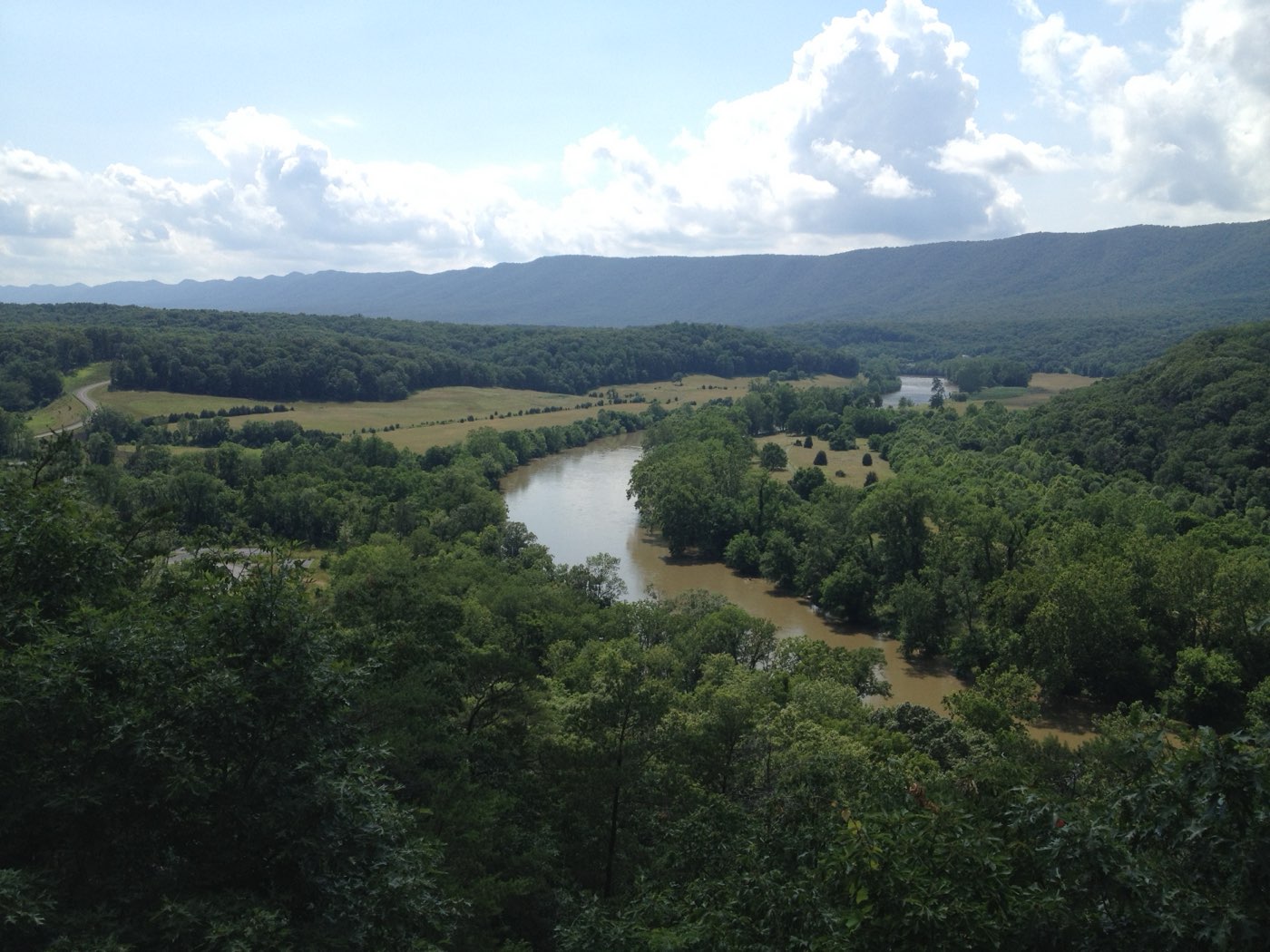
The Susquehanna (PA, MD). The dominant smallmouth river in the Mid-Atlantic. The North Branch produces consistent fish from Sunbury south. The middle and lower Susquehanna (Harrisburg to Conowingo) carries trophy populations and miles of wadeable water at low flows. The river was hit hard by smallmouth disease in the 2010s; populations have recovered partially but remain below historical highs in some sections. Check PFBC current advisories before targeting.
See the full Susquehanna smallmouth guide.
The Shenandoah (VA). The North Fork and South Fork meet at Front Royal to form the main Shenandoah, which flows north to the Potomac. The forks fish like classic Eastern smallmouth water — riffle-pool sequence, abundant crayfish, healthy populations. The main stem fishes larger; bigger river, bigger fish, more deep-water tactics. Murray's Fly Shop in Edinburg has been the de facto Shenandoah smallmouth headquarters for fifty years.
See the full Shenandoah smallmouth guide.
The Potomac (MD, VA). The mainstem Potomac from Cumberland down to Great Falls. The 30-mile section from Hancock to Williamsport in Maryland is one of the best wadeable smallmouth fisheries on the Eastern Seaboard. Mid-Atlantic Fly Fishing magazine has covered this water for years; healthy populations, consistent topwater bite July-August.
The James (VA). Upper James above Lynchburg, middle James through the Piedmont. The river carries strong smallmouth through ledge-and-pool water that rewards Clouser fishing along seams. The lower James (below Richmond) fishes differently — bigger, slower, requires boat access for most of it.
The New River (NC, VA, WV) deserves a separate mention. The New is technically not a Mid-Atlantic river — it's an Appalachian river — but it produces some of the largest smallmouth east of the Mississippi. State record fish from New River sections in NC and VA exceed 8 pounds. Worth a dedicated trip for any Mid-Atlantic smallmouth angler.
Common mistakes a trout angler makes on smallmouth water
Mistake 1: dead-drifting
What it looks like: A trout angler casts a Clouser to a smallmouth seam, mends, drifts the fly through, repeats. Why it happens: Trout muscle memory. The fix: Strip. Strip aggressively. Six-inch pulls with 1-2 second pauses. The take usually comes on the pause; the strip triggers the chase.
Mistake 2: too small a fly
What it looks like: Size 10 streamer or size 14 nymph being fished for smallmouth. Why it happens: Trout box muscle memory. The fix: Size 4-8 streamers, size 6-2 surface bugs. Smallmouth eat chunks. Small flies catch small fish only.
Mistake 3: too light a tippet
What it looks like: 5X tippet on a 6-weight, fishing a Clouser. First good fish breaks off in structure. Why it happens: Trout tippet habits. The fix: 0X to 2X. Smallmouth aren't tippet-shy. The cost of going lighter is breaking off fish in structure; there is no upside.
Mistake 4: not enough movement
What it looks like: Slow strips, long pauses, polite presentation. Why it happens: Selective trout water trains an angler to be invisible. The fix: Be visible. Aggressive strips, surface commotion on poppers, big motion. Smallmouth respond to motion the way trout respond to dead-drift.
Mistake 5: targeting all water equally
What it looks like: Casting to every yard of river without prioritizing structure. Why it happens: Trout water on a freestone stream often does fish evenly; smallmouth water doesn't. The fix: Target the high-value structure first — current breaks, rock seams, log jams, drop-offs at the head and tail of pools. Cover those, then move to the next structure. Don't grind through neutral water.
Drills to practice
- The 50-cast streamer drill. Pick a 100-yard piece of river. Make 50 casts; on each, count the strip cadence, watch the fly's swim depth, note where in the swing the fly looks alive vs lifeless. Goal: every cast becomes deliberate, not autopilot.
- The figure-eight retrieve. When a smallmouth follows but doesn't commit, sweep the fly into a figure-eight at the boat or rod tip — this is musky-fishing technique that translates well. Forces a commit-or-leave decision from interested fish.
- The topwater pause discipline. On surface bugs, count to three after every pop. Most anglers strip again at one second; the bite is at three. Train the pause.
When to fish trout instead
- Water temps over 82°F or under 50°F. Smallmouth shut down at both extremes; trout in tailwaters keep feeding.
- Spawning closures. When PA, VA, or MD closes smallmouth water during the spawn (varies by section; check current regulations), respect the closure.
- Heavy hatches on adjacent trout water. During Penn's Creek's Green Drake hatch in late May, the trout fishing is once-a-year; smallmouth water can wait.
Patterns this guide references
The smallmouth fly box mostly doesn't overlap with the trout fly box. A few patterns work both:
- Mop Fly — cold-water smallmouth in stained spring water
- Squirmy Wormy — pre-spawn smallmouth on dead drift
- Walt's Worm — small-stream smallmouth where the river is small enough to fish trout patterns
Most smallmouth flies are a separate cluster — Clousers, Murdich Minnows, Sculpzillas, crayfish patterns, deer-hair bass bugs — covered pattern by pattern in the fly box section above.
Where to fish smallmouth in the Mid-Atlantic
- Susquehanna River smallmouth guide — the dominant Mid-Atlantic smallmouth river, Harrisburg water and below
- Shenandoah River smallmouth guide — forks and main stem, classic riffle-pool crayfish water
- Potomac and James guides coming — both covered in the river map above
Further reading
- Smallmouth Bass: A Fly Fishing Guide by Bob Clouser — the definitive Mid-Atlantic smallmouth book; foundational
- Modern Smallmouth Bass Fly Fishing by Dave and Emily Whitlock — comprehensive technique reference
- Fly Fisherman — Trout Tactics for Smallmouths — the contrast frame; useful even where I'd disagree
- Murray's Fly Shop, Edinburg VA — Harry Murray's books and patterns are required reading for Shenandoah smallmouth
Technique to combine with this
- Reading Water on Trout Streams — the layered taxonomy translates directly to smallmouth water; just shift from "drift seams for sipping fish" to "ambush points for chasing fish"
- Euro nymphing complete guide — relevant only for cold-water smallmouth on dead drift; not the primary technique
*Last updated: 2026-04-28. *
Sources cited: ToFlyFish — Fly Fishing for Smallmouth Bass: Complete Guide, ToFlyFish — Smallmouth Bass Flies: Complete Guide, Sipping Mayflies — Fly Fishing for Smallmouth Bass, Fly Fisherman — Trout Tactics for Smallmouths, Dark Skies Fly Fishing — Fly Fishing for Smallmouth Bass in Small Streams, Flylords — Fall Fishing for Smallmouth Bass.