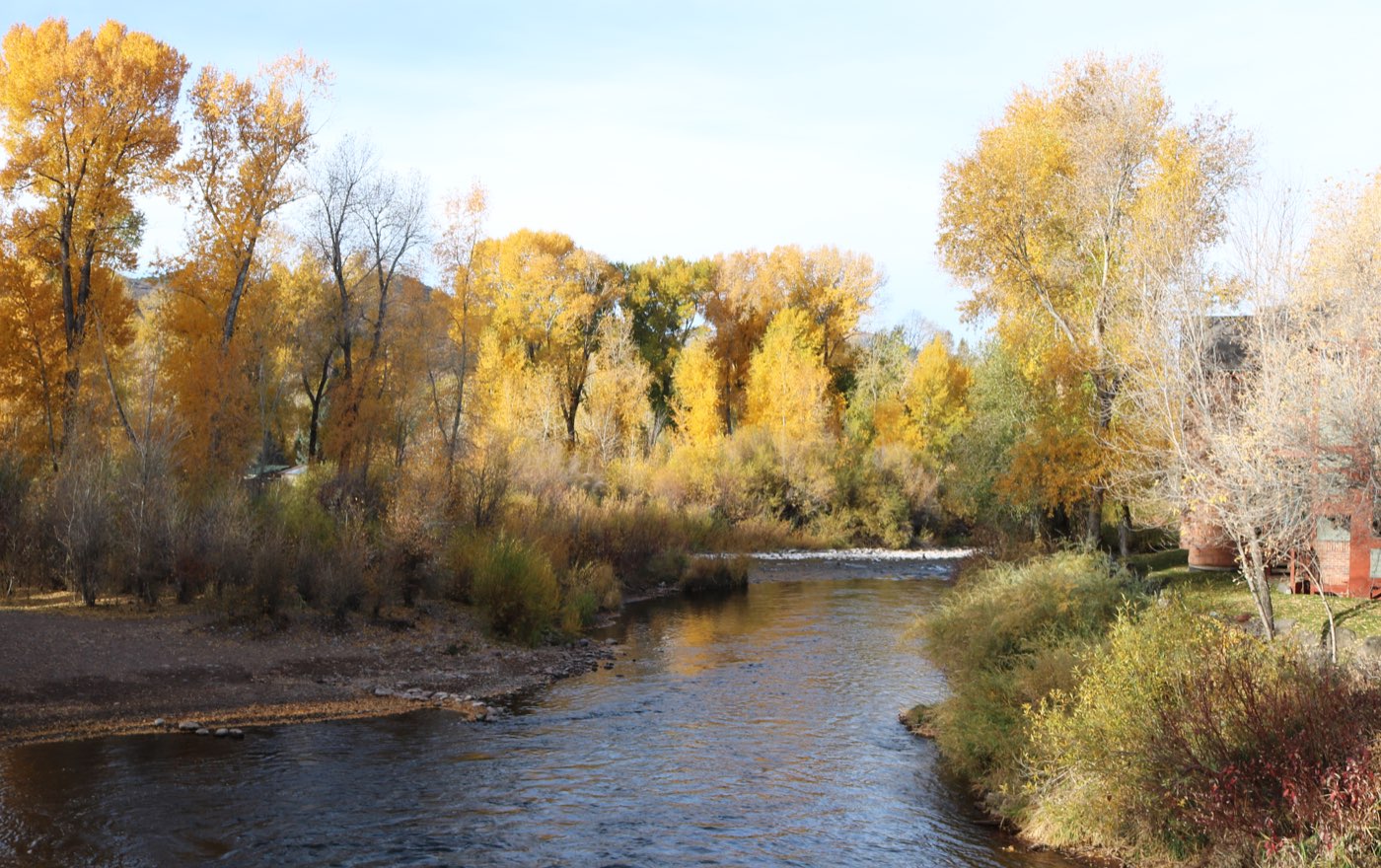
Frying Pan River CO: section-by-section guide
The Frying Pan is a 14-mile tailwater below Ruedi Reservoir in the Roaring Fork drainage, east of Basalt, Colorado. It runs cold year-round — Ruedi releases water from depth — and it grows big rainbows on a diet of mysis shrimp that flush from the reservoir. The average fish here is 16-18 inches. The Mysis Hole section below the dam holds trout that top 20 inches regularly enough that first-timers mistake the size for exaggeration until they hook one.
This is pressured, clear, technical water. The fish see anglers every day of the year. Understanding the sections — the dam pool, the upper canyon, the lower canyon through Basalt, and the confluence — determines whether you fish effectively or spend the day watching large trout ignore everything you throw.
Quick reference
| Factor | Detail |
|---|---|
| Location | Basalt, CO — Pitkin County |
| Access | CO-36 (Frying Pan Road) follows the entire river |
| Watershed | Roaring Fork watershed, Colorado River basin |
| Regulations | Check CPAW — Mysis Hole section typically flies and lures only, catch-and-release |
| Primary species | Rainbow trout; some brown trout in lower sections |
| Average fish size | 16-18 inches; trophy fish 20-24 inches |
| Best seasons | Year-round; January-March for heavy mysis fishing; May-June PMD hatch; October for streamer |
| Water type | Tailwater — cold (38-50°F), clear, low conductivity |
| Crowds | High pressure all seasons; weekday mornings are quietest |
The Mysis Hole section
The half-mile stretch immediately below Ruedi Dam is what puts the Frying Pan in national conversation. Mysis relicta — a small freshwater shrimp native to deep glacial lakes — was stocked in Ruedi Reservoir decades ago as a food source for kokanee salmon. The kokanee were eaten out of the reservoir; the mysis thrived. Now they flush continuously through the dam's deep-water release outlet, running 12 months per year, and the rainbows waiting below the outlet have grown into specimens.
Access: The Mysis Hole parking area is at the end of FR 105, approximately 14 miles up Frying Pan Road from Basalt. Limited spots; arrive early.
Water character: Below the dam outlet, the river runs 20-40 feet wide with moderate depth — 2-4 feet over clean cobble and gravel. Flow is regulated; the dam typically releases 40-120 cfs, producing fishable water regardless of season or precipitation. The current is moderate to gentle. Visibility is 8-10 feet.
Where fish hold: Directly below the outlet in a plunge pool that scours 6-8 feet; fish stack here in winter. Along the right bank in the first 200 yards below the outlet, where a seam forms between slower bank water and the main current thread. In the mid-river shelf runs 100-300 yards below the dam, where cobble creates a bottom break and fish intercept mysis at mid-column.
Flies: Mysis shrimp imitations dominate year-round. Standard patterns:
- Silvey's Mysis Shrimp (size 16-20, clear/white)
- Kirk's Mysis Shrimp (size 18, pearl or milky body)
- Soft-hackle Hare's Ear in size 16-18 as a mysis sub
Fish the mysis dead-drift at mid-column to bottom — mysis sink when they flush, so bottom presentations outperform surface or mid-water. Rio 5X or 6X fluorocarbon tippet. Long leaders 12-15 ft. Czech or French tight-line nymph rigs outperform indicator rigs for mysis precision.
Technique note: Mysis fish are educated. They see exact replicas hundreds of times per week. Tippet matters: 6X is baseline; 7X in clear water under low pressure. Approach the water before the fish see your shadow. The rainbows in the Mysis Hole sit close to the bottom in slow or slack current adjacent to the main thread — don't wade the run itself before fishing the edges.
Upper canyon — dam to Ruedi Road bridge
The 4 miles between the dam and the Ruedi Road bridge transitions from the technical mysis fishery into broader tailwater water with more diverse structure. Flow widens; multiple seam configurations develop.
Access: Multiple pullouts along CO-36 in this section. The road closely parallels the river. Walk-in access at any parking turnout.
Water character: Riffles, pocket water, and pool sequences. Slightly more gradient than the Mysis Hole section. During moderate release flows (60-100 cfs) the water runs knee-deep to chest-deep in alternating riffle and run sequences.
Best water: The riffle-run breaks throughout this section. Where the road crosses close to the water, look for the seam that forms at the tail of any riffle — this is where fish stage during low-light periods to intercept emerging insects. The runs adjacent to undercut limestone and sandstone banks hold larger fish.
Flies: PMDs (Pale Morning Duns) are the signature hatch June through early August. Standard PMD dries: Sparkle Dun, Quigley Cripple, Comparadun in 16-18. Subsurface: Hot Spot Pheasant Tail, RS2 in 20-22 below the surface film during emergence. Mysis patterns remain productive in runs with slower current close to the reservoir.
Access note: Portions of this section pass through private land with public water easements. Stay in the river or on the public riverbank marked by signs. The road easement is public; the land above the high-water mark may not be.
Lower canyon — Ruedi Road bridge to Basalt
This middle section of the river runs 6 miles through a narrow canyon before reaching Basalt. The canyon walls close in, shade increases, and the character changes: deeper pools, longer runs, and pocket water around mid-canyon boulders that fell from the canyon walls.
Access: CO-36 continues to track the river with multiple turnouts. The canyon walls limit some wading access to the left bank (facing downstream).
Water character: Deeper, darker water in the canyon core. Mid-canyon pools run 5-8 feet. The increased shade and depth grow larger brown trout that don't appear in numbers above Ruedi Road.
Seasonal note: October through November, brown trout move into the lower canyon from the Roaring Fork to stage for spawning. Streamer fishing — Woolly Buggers in olive and black, Sculpzillas, Drunk and Disorderly patterns — produces large fish in this window. Strip slow along the canyon walls and across pool heads.
Flies (lower canyon): Streamer season October-November. Year-round: midges (Griffith's Gnat, Zebra Midge, Mercury Midge in 20-24) during winter; PMD and caddis in summer; terrestrials (grasshoppers, beetles) along canyon walls in July-August.
Basalt town water and Roaring Fork confluence
Below Basalt, the Frying Pan enters the Roaring Fork within the town limits. This water receives heavy fishing pressure but also benefits from access: town water access, the Lions Club reach below the confluence, and the easier gradient.
Species shift: The confluence zone mixes the Frying Pan's rainbow fishery with the Roaring Fork's brown trout population. Large browns move up from the Roaring Fork into the Pan's lower reach in fall.
What's different here: The flow character changes significantly below the confluence — the combined volume of Frying Pan and Roaring Fork water creates deeper, slower stretches that fish more like big-river smallmouth water than technical tailwater. Anglers used to the tight, precise mysis fishing above will find this section rewards more aggressive presentations.
Season-by-season strategy
| Season | Primary target | Primary technique | Top patterns |
|---|---|---|---|
| January-March | Mysis Hole rainbows | Tight-line nymph, bottom-drift | Mysis shrimp imitations 16-20 |
| April-May | Whole river | Nymph and emerging dry | RS2, BWO Comparadun; mid-day dry activity |
| June-August | Upper canyon and lower canyon | PMD hatch; morning nymph | Sparkle Dun 16, Quigley Cripple, Elk Hair Caddis |
| September-October | Lower canyon and confluence | Streamer | Olive Woolly Bugger, Sculpzilla, Drunk and Disorderly |
| November-December | Mysis Hole; entire river | Midge nymph | Zebra Midge 20-22, Mercury Midge; Mysis on calm days |
Logistics
Nearest town: Basalt, CO — 20 minutes from Aspen, 25 minutes from Glenwood Springs.
Regulations: Colorado Parks and Wildlife regulations apply. The Mysis Hole section has historically required flies and lures only, with catch-and-release — confirm current regulations on CPW website before fishing.
Guides: Several Basalt-based guide services (Roaring Fork Anglers, Taylor Creek Fly Shop, Aspen Outfitting) specialize in Frying Pan guiding. First-time visitors to the Mysis Hole benefit from a guide trip for understanding fish location.
Wading: Felt or rubber-soled wading boots on polished cobble — slippery at all flows. Wading staff strongly recommended throughout canyon sections.
Patterns worth carrying
- Silvey's Mysis Shrimp (16-20) — the essential Mysis Hole fly
- RS2 in olive and gray (20-22) — PMD and Baetis emerger
- Sparkle Dun, PMD (16-18) — June hatch dry
- Zebra Midge (20-22) — year-round subsurface
- Elk Hair Caddis (16) — summer evenings
- Olive Woolly Bugger (8-10) — fall canyon streamer
Related reading
- Reading water on trout streams — the Frying Pan's seam structure is textbook for what this guide covers
- Euro nymphing — the technique that dominates mysis presentations at the Mysis Hole
*Last updated: 2026-05-01. *
Sources cited: Colorado Parks and Wildlife — Frying Pan River fishing regulations, Taylor Creek Fly Shop — Frying Pan River report, Roaring Fork Conservancy — Frying Pan watershed, Fly Fisherman Magazine — Mysis shrimp and tailwater rainbow trout.